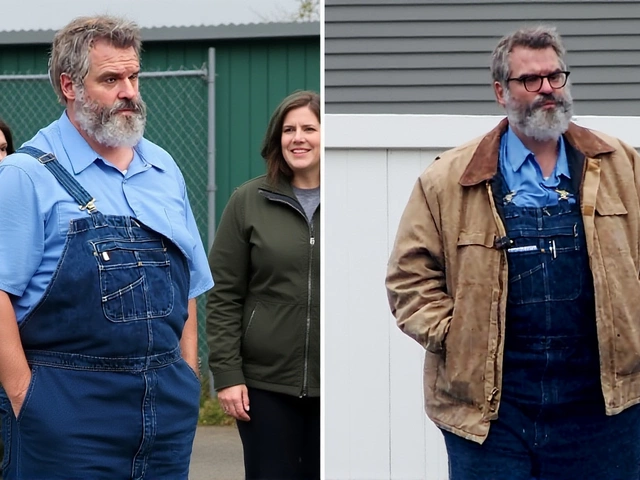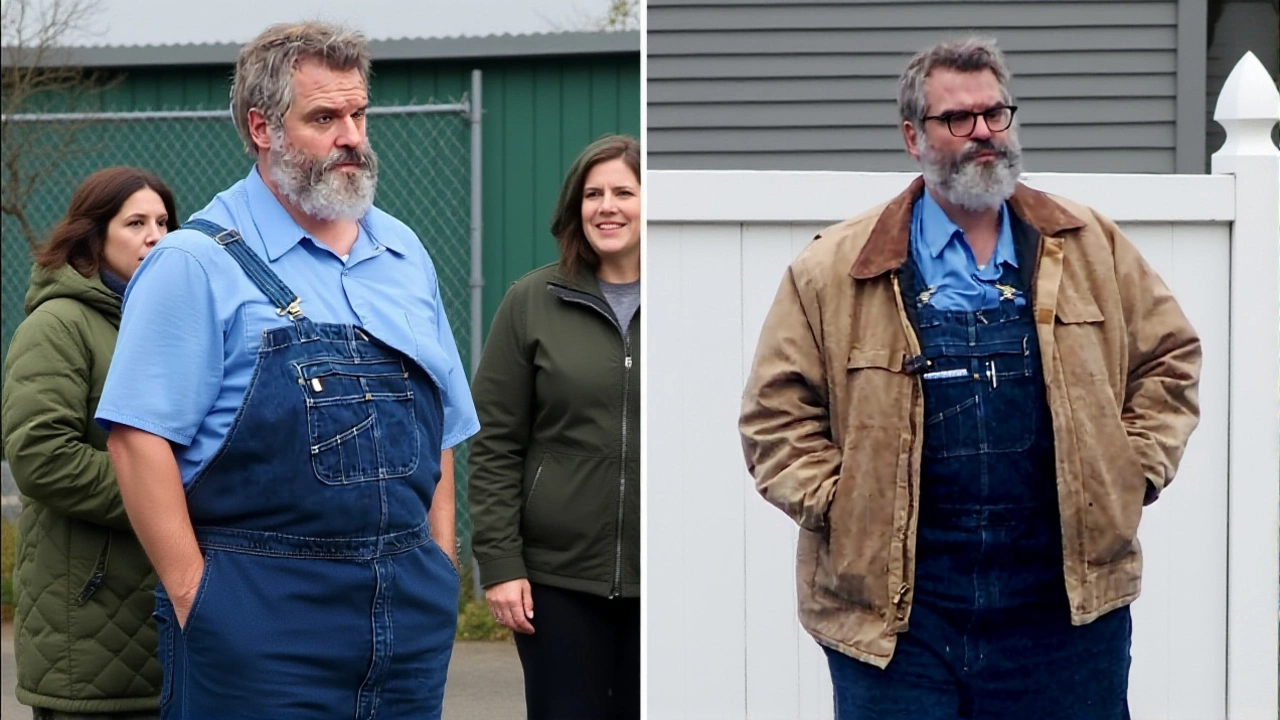
David Harbour, the 49-year-old star of Stranger Things, has vanished into his role — literally. Filming for Evil Genius, the true-crime thriller directed by Courteney Cox, began in November 2025 in New Jersey, and Harbour is reportedly unrecognizable, hidden beneath a custom fat suit as he portrays Brian Wells, the doomed pizza delivery man at the center of one of the FBI’s most bizarre crimes. The film, produced by Aggregate Films and August Night, adapts the 2018 documentary series of the same name, turning the 2003 pizza bomber case into a haunting cinematic exploration of manipulation, desperation, and moral ambiguity.
The Crime That Stunned a Nation
On August 28, 2003, Brian Wells, a 46-year-old pizza delivery driver from Erie, Pennsylvania, walked into a PNC Bank wearing a 25-pound collar bomb. He held a gun, handed a note, and demanded money. When he failed to complete a series of cryptic instructions left in his car, the device detonated, killing him instantly. The FBI called it “one of the most complicated and bizarre crimes in the annals of the FBI.” What made it surreal wasn’t just the bomb — a jury-rigged, non-removable device with a timer — but the scavenger hunt of clues, coded messages, and dead drops that led Wells from one location to the next, as if he were playing a deadly game.
Investigators eventually traced the plot to Marjorie Diehl-Armstrong, a 75-year-old woman from Erie who had been obsessed with inheritance and revenge. She allegedly recruited Wells after he helped her boyfriend, Kenneth Barnes, rob a bank years earlier. Barnes, who died before trial, was thought to be the original architect. Diehl-Armstrong, along with co-conspirator William Rothstein, was convicted in 2007. But the central question lingers: Was Wells a willing participant, or was he just a broken man caught in a web of manipulation?
From Documentary to Feature Film
The 2018 documentary by Barbara Schroeder and Trey Borzillieri became a cult hit for its chilling interviews with Wells’s family, who insisted he was innocent — a man too simple-minded to orchestrate such a scheme. The new film, written by Schroeder, Borzillieri, and Courtenay Miles, leans into that ambiguity. “It’s not about the bomb,” says one producer. “It’s about the person who wore it. Who was he? What did he know? And who made him believe this was his only way out?”
Harbour, known for his brooding intensity as Jim Hopper, has shed his Stranger Things persona completely. Sources on set say he gained over 40 pounds for the role, wore prosthetics, and studied Wells’s voice recordings and home videos. “He doesn’t look like David Harbour anymore,” said a crew member who spoke anonymously. “He looks like someone who’s been worn down by life — tired, confused, just trying to get through the day.”
A Director’s Bold Leap
Courteney Cox, 60, known globally as Monica Geller from Friends, is stepping into a new creative chapter. Though she’s directed episodes of Cougar Town and Shameless, this is her first feature film as lead director — and it’s a daring one. “She’s not interested in sensationalism,” said a source close to production. “She wants to sit with the silence between the lines. The horror isn’t the explosion. It’s the quiet before it.”
Joining Harbour is Patricia Arquette, 56, in a mysterious role believed to be Diehl-Armstrong. Supporting actors include Michael Chernus, Garret Dillahunt, and Danielle Macdonald, all known for their ability to convey quiet desperation.
Why This Story Still Haunts Us
The pizza bomber case didn’t just shock people — it unsettled them. It wasn’t a crime of greed or rage. It was a crime of control, of someone exploiting a vulnerable man’s need for belonging. Wells had no criminal record, no history of violence. He worked two jobs, loved his dog, and had a reputation for being kind but easily led. His family says he was manipulated like a child. The FBI’s own files suggest he may have known more than he let on — but never enough to save himself.
That tension — between victim and accomplice, between innocence and complicity — is what makes this case timeless. It’s why documentaries still get streamed, why true-crime podcasts revisit it, and now, why a major film is being made. In a world obsessed with villains, this story asks: What if the villain didn’t even know they were playing the game?
What Comes Next
Principal photography wraps in early 2026, with a targeted release window of late 2026 or early 2027. Netflix, which owns the rights to the original documentary, is reportedly in talks for distribution. If the film lands there, it could become a defining true-crime entry of the decade — not because of its shocks, but because of its sorrow.
Harbour’s transformation isn’t just physical. It’s emotional. He’s not playing a character. He’s embodying a question. And in doing so, he’s forcing audiences to confront one of the most uncomfortable truths in crime: Sometimes, the worst thing isn’t the bomb. It’s the silence of the people who let it happen.
Frequently Asked Questions
Was Brian Wells really innocent, or did he help plan the robbery?
The FBI concluded Wells had limited involvement — possibly helping plan the initial bank robbery years earlier — but there’s no evidence he knew about the bomb. His family, friends, and even some investigators believe he was coerced into the final act. The handwritten instructions found in his car suggest he was being led like a pawn, not guiding the plan. The film leans into this ambiguity, refusing to give a clear answer.
Why did Courteney Cox choose this story to direct?
Cox has said in interviews that she was drawn to the psychological depth of the case — not the spectacle. She’s interested in how ordinary people get trapped in extraordinary situations. The film’s focus on Wells’s humanity, rather than the bomb’s mechanics, reflects her desire to tell a story about loneliness, manipulation, and the quiet desperation of people who feel invisible.
How accurate is the film to the real events?
The filmmakers worked closely with the original documentary team and FBI case files. Key details — the scavenger hunt, the bomb’s design, the roles of Diehl-Armstrong and Rothstein — are factually grounded. However, dialogue, character motivations, and internal monologues are dramatized. The film’s goal isn’t to be a documentary, but to make viewers feel the weight of what happened.
Why is David Harbour using a fat suit?
Brian Wells was overweight and visibly out of shape at the time of his death. Harbour gained over 40 pounds and used prosthetics to replicate Wells’s posture, gait, and facial structure. The fat suit isn’t just for appearance — it’s a tool to physically embody the exhaustion and vulnerability that defined Wells’s final days. It’s a deliberate choice to humanize him, not caricature him.
What happened to Marjorie Diehl-Armstrong after the trial?
Diehl-Armstrong was sentenced to life in prison without parole in 2007. She remains incarcerated at the Federal Medical Center in Carswell, Texas. She has never expressed remorse publicly. In prison interviews, she claimed she was “just trying to fix her life.” Her co-conspirator, William Rothstein, died in 2018 while serving a life sentence. The case remains closed, but the questions about Wells’s role linger.
Is this film going to be exploitative?
Early reports suggest the opposite. Unlike many true-crime adaptations, this film avoids graphic depictions of the explosion. Instead, it focuses on Wells’s daily life, his interactions with family, and the chilling normalcy of the events leading up to his death. Director Courteney Cox has emphasized emotional truth over shock value, aiming for a quiet, devastating impact rather than sensationalism.